

JOIN KEYHOLE
Together, Turn Invisible Optical Paths
into Verifiable Answers.
Help build the first generation of OVX from the ground up. Work across optics, algorithms, software, hardware and customer applications to define an instrument together.
Apply NowCompensation ranges appear in job titles; optics and algorithm descriptions also include role-level ranges. Confirm individual terms with the recruitment contact.
Software EngineerCNY 240,000–350,000/yearView Position Details +
About Us
Keyhole Photonics develops advanced silicon photonics test equipment. We are building our first-generation core product, with software connecting optics, electronics and algorithms. Help develop the instrument's software from the ground up, without legacy-code maintenance, and explore AI-assisted programming in depth.
Key Responsibilities
- Core development: Build silicon photonics test software in Qt/C++, covering instrument control, high-speed data acquisition and 2D/3D/waterfall visualization, with a focus on stability and responsiveness.
- AI-assisted development: Use Claude Code / Cursor for coding, debugging and documentation. Help define AI-assisted development standards and review processes to improve delivery quality.
- Hardware/software integration: Integrate optical, FPGA and DAQ interfaces. With senior guidance, analyze SDKs/DLLs and develop adaptation layers to shorten integration cycles.
- Engineering delivery: Resolve practical issues such as memory management and multithreading; write clear design and test documentation.
Requirements
- Essential:
- Strong C++ fundamentals, including C++11 or later, memory management and multithreading.
- Qt experience in Widgets or QML and the ability to develop desktop application modules independently.
- Good debugging skills and disciplined coding practices.
- Desirable (one or two are sufficient; not mandatory):
- Commercial Qt experience or involvement in complex desktop applications.
- Familiarity with hardware communication protocols such as TCP, UDP or SCPI.
- Experience using Cursor / Claude Code and reviewing and improving generated code.
- Experience developing automated tests or engineering tools.
- Background:
- Bachelor's degree or above in computer science, software engineering, automation or a related discipline.
- Experience is flexible: Candidates with 1–3 years of experience, strong fundamentals and initiative receive one-to-one technical guidance. Senior engineers have room to take ownership.
- Strong competition results in ACM, Lanqiao Cup or electronic design, or substantial open-source contributions, may support flexibility in degree and experience requirements.
What We Offer
- Mentorship: Direct guidance from the technical lead to develop broader systems-engineering skills.
- Room to learn: We value problem-solving and learning, not perfect code on the first day.
- Competitive compensation and core equity incentives, with the opportunity to participate in silicon photonics growth.
Apply
Send your resume to hr@keyholephotonics.com and briefly describe a development challenge you would most like to solve using AI tools.
Send Your Resume ↗Assistant Software EngineerCNY 120,000–240,000/yearView Position Details +
Who We Are Looking For
If you enjoy programming and are interested in hardware interaction or data visualization but have limited experience, this role is designed for you.
You are not expected to own the architecture immediately. Work with a senior technical lead and current AI programming tools to develop our first-generation silicon photonics instrument software.
What You Will Do
- Development support: Help build and maintain Qt interfaces and visualize optical measurement data.
- AI tools: Learn Claude Code / Cursor for coding, documentation and unit tests to accelerate learning.
- Integration support: Assist FPGA/optical hardware integration; record and analyze test data accurately.
- Documentation: Maintain development documents, user manuals and shared technical assets.
What We Look For
- Strong foundations: Current students or recent graduates in computer science, automation, optoelectronics or related fields, at bachelor's level or above. Qt expertise is not required; C/C++ fundamentals are.
- Quick learning: Curiosity about new technology, especially AI-assisted programming, and the ability to adopt new tools.
- Reliability: Careful work, reproducible bug reports and clear problem descriptions.
- Desirable: Qt exposure, simple hardware-control experience such as Arduino/Raspberry Pi, or competition achievements.
What You Will Gain
- Mentorship from the technical lead, avoiding common self-study pitfalls and building large-project experience.
- Direct participation in real advanced-instrument R&D, not routine business application code.
- Conversion opportunities: Strong performers may join full-time after graduation with competitive pay and stock options as early core team members.
Apply
Email your resume to hr@keyholephotonics.com with the subject “Assistant Software Engineer / Intern – Your Name”. Include coursework projects or GitHub links if available.
Send Your Resume ↗Optical Systems EngineerCNY 260,000–680,000/yearView Position Details +
About Us
We develop advanced silicon photonics test instruments and are moving from laboratory proof of principle to production-oriented prototypes. We seek an optics lead or specialist to tackle precision interferometric measurement engineering.
Key Responsibilities
- System architecture: Design precision interferometric optical systems. Address phase noise, polarization fading and nonlinearity correction for high-SNR, stable measurements.
- Engineering challenges: Solve long-term thermal drift, vibration isolation and source-linearity issues. Define precision alignment and assembly procedures for repeatability and manufacturing feasibility.
- Supply-chain specifications: Define narrow-linewidth laser, polarization-maintaining component and balanced-detector requirements; work with suppliers on prototypes and acceptance.
- Knowledge transfer: Write optical design and test specifications and mentor colleagues in optical engineering.
Requirements
- Theory: Deep understanding of coherent optics and interferometry, including linewidth, phase noise, beat frequencies and polarization fading; experience with fiber/free-space hybrid paths.
- Practical experience:
- Independent construction of complex interferometers; proficiency in PM/SM fiber splicing, alignment and return-loss control.
- Experience resolving parasitic reflections, noise and drift in optical systems.
- Physical-optics simulation using at least one of Zemax, COMSOL or VirtualLab.
- Tools: Python or MATLAB for instrument control and data validation. Large software-project experience is not required, but rapid algorithm verification is.
- Qualifications:
- Optical engineering, physical electronics or a related discipline; PhD preferred, or a strong master's degree with at least three years of closely relevant experience.
- Provincial-level or higher awards in major optoelectronic design competitions may support flexibility in degree requirements.
What We Offer
- Technical ownership: Report to the technical lead and shape the optical architecture that determines product capability.
- Resources: R&D budget and advanced optical platforms to support your ideas.
- Competitive compensation and core equity linked to shared technical achievement.
Compensation and Rewards
Optical Engineer: CNY 20,000–35,000/month over 13 payments; CNY 260,000–450,000/year.
PhD / Technical Lead: From CNY 600,000/year, negotiable without a fixed upper limit. Packages including core equity reflect expertise in optical architecture, thermal drift and noise reduction.
Send Your Resume ↗Assistant Optical EngineerCNY 120,000–240,000/yearView Position Details +
Who We Are Looking For
If you enjoy hands-on optics and want to enter advanced technology, this role offers a starting point even with limited experience. Candidates from strong optoelectronics programs are welcome.
Advanced derivations are not essential at entry, but steady hands, attention to detail and curiosity are. Work with senior optical specialists to build and optimize first-generation instrument optical paths.
What You Will Do
- Optical assembly and alignment: Under mentorship, build, align and secure test-system optical paths for stable, low-loss connections.
- System maintenance: Clean fiber end faces, inspect paths and replace consumables.
- Test execution: Use Python/MATLAB scripts, with training, or existing software to acquire data and record power, SNR and stability.
- Process documentation: Help write assembly/alignment SOPs, organize test data and maintain technical documentation.
What We Look For
- Background: Current bachelor's/master's students or recent graduates in optics, physics, optoelectronics or related fields.
- Core qualities:
- Strong practical skills, patience and steady work. Fiber-splicer and microscope experience is desirable.
- Careful and rigorous: Familiarity with optical power meters or oscilloscopes and accurate experimental records.
- Willingness to learn optical theory and basic tools such as Python.
- Desirable:
- Participation in optoelectronic design competitions.
- Sustained hands-on work in an optics laboratory.
- Interest in precision mechanical assembly.
What You Will Gain
- One-to-one guidance from senior optical specialists, starting with fiber handling and developing advanced-instrument skills.
- Core skills: Learn assembly and alignment of precision interferometers and silicon photonics test systems.
- Competitive compensation and stock options for strong performers, with opportunities to contribute to more advanced optical design as skills develop.
Algorithm Specialist (Signal Processing / Physical Modeling)CNY 310,000–680,000/yearView Position Details +
About Us
We seek an algorithm lead or specialist to address physical modeling and signal-processing challenges in precision interferometric measurement during core algorithm development.
Key Responsibilities
- Physical modeling and architecture: Model interferometric optical systems; lead sweep nonlinearity correction, high-dynamic-range processing, phase unwrapping and signal reconstruction in scattering media.
- Emerging methods: Explore where signal processing and deep learning can be combined for nonstationary noise suppression and weak-signal extraction. Use AI tools such as Claude Code for literature research, prototyping and benchmarks.
- Cross-disciplinary requirements: Translate resolution and drift targets into SNR and convergence requirements with optics teams; define data interfaces and compute constraints with software/FPGA teams.
- Technical documentation: Produce mathematical model descriptions and algorithm design specifications to guide implementation.
Requirements
- Essential theoretical foundations:
- Strong DSP foundations, including Fourier transforms and adaptive filtering, and numerical methods including matrix theory and optimization.
- Familiarity with coherent-optics models for interference, dispersion and polarization; independent mapping from physical phenomena to mathematical models.
- Modeling and tools:
- Proficiency in MATLAB/Python and scientific computing, including independent simulation and data-processing pipelines.
- Use AI programming tools for derivations, paper reproduction and optimization, with strong independent code-verification skills.
- Familiarity with FFTW, OpenCV and implementation of core FFT, convolution and filtering operators.
- Engineering awareness:
- C/C++ fundamentals and the ability to discuss fixed-point implementation and real-time requirements.
- Data-driven investigation of algorithm failure mechanisms.
- Qualifications:
- Master's degree or above in electronic information, applied mathematics, physics or a related field, with at least three years of relevant experience.
- Algorithm experience in hyperspectral imaging, OCT or precision instrumentation is preferred.
- Strong results in mathematical modeling competitions are preferred, as specified in the Chinese recruitment description.
What We Offer
- Technical ownership: Your models shape measurement accuracy.
- Resources: Computing capacity and advanced optical platforms.
- Competitive compensation and core equity linked to shared technical achievement.
Compensation and Rewards
Algorithm Engineer: CNY 22,000–30,000/month over 13 payments; stated annual range CNY 310,000–450,000. Confirm package details with recruitment.
Senior Algorithm Specialist / PhD: From CNY 600,000/year, negotiable without a fixed upper limit, including equity incentives for exceptional physical-modeling expertise.
Send Your Resume ↗Assistant Algorithm EngineerCNY 150,000–300,000/yearView Position Details +
Who We Are Looking For
If you have strong mathematics and programming skills and are interested in signal processing or physical modeling but lack full-project experience, this role offers a starting point.
You need clear reasoning, coding ability and curiosity rather than the ability to derive every model from scratch. Work with senior specialists to verify, implement and optimize instrument algorithms.
What You Will Do
- Algorithm verification and implementation: Convert FFT, filtering and interpolation methods into Python/MATLAB, validate through simulation, benchmark performance and visualize results.
- Data processing: Clean, denoise and extract features from raw optical measurements; help build a golden-data test library.
- AI assistance: Learn AI tools for scripting, documentation and reproduction of straightforward published algorithms.
- Documentation and collaboration: Write algorithm test reports, maintain technical documents and provide interface descriptions for software/FPGA engineers.
What We Look For
- Background: Current bachelor's/master's students or recent graduates in electronic information, applied mathematics, computing, physics or related fields.
- Core qualities:
- Strong mathematics: Good performance in linear algebra, probability and DSP.
- Strong coding: Python or MATLAB proficiency and effective use of NumPy, SciPy and Matplotlib.
- Willingness to learn optics, C/C++ and basic hardware implementation concepts.
- Desirable:
- Participation in mathematical modeling or electronic design competitions.
- Simple machine-learning project experience, such as using scikit-learn.
- Familiarity with Git version control.
What You Will Gain
- One-to-one mentoring in the underlying logic of advanced algorithms, beyond calling libraries.
- Develop core precision-instrument signal-processing skills and practical implementation experience.
- Strong performers may receive competitive compensation and stock options, with opportunities for core algorithm modeling as skills develop.
FPGA Logic EngineerCNY 250,000–350,000/yearView Position Details +
About Us
FPGA connects high-speed acquisition and real-time processing in our silicon photonics instruments. We seek an engineer to develop core high-speed interfaces and processing paths for performance and stability.
Key Responsibilities
- High-speed interfaces: Develop DAQ/ADC/DAC FPGA logic for JESD204B/C, LVDS and SerDes. Integrate PCIe/DMA with Qt/C++ host software for low-latency, gigabyte-scale data transfer.
- Algorithm implementation: Implement FFT, resampling and filtering in RTL/HLS FPGA IP. Develop k-clock resampling, trigger synchronization and multichannel stitching with timing closure and controlled resource use for continuous operation.
- Board-level integration: Use oscilloscopes, logic analyzers and IBERT for signal-integrity debugging and eye scans. Investigate acquisition errors, data loss and jitter with optics/software teams and define hardware calibration methods.
Requirements
- Essential technical foundations:
- Verilog/VHDL proficiency; deep understanding of CDC, reset strategies, pipelining and AXI.
- Vivado/Quartus proficiency with practical experience in Xilinx 7-Series, Kintex UltraScale+, Zynq or comparable devices.
- Independent delivery from RTL and simulation/testbench development through board-level debugging.
- AI tools (desirable, not mandatory):
- Use Claude Code / Cursor while identifying timing risks and resource inefficiency in generated RTL.
- Use AI to review vendor IP documentation, create testbench templates and assist Python/TCL automation.
- Desirable:
- HLS experience, including Vitis HLS and algorithm implementation.
- Zynq MPSoC experience and familiarity with ARM-side Linux drivers.
- Optical communication or instrument-project exposure, such as OTDR/spectrometers, and understanding of triggering, accumulation and averaging.
Background Requirements
- Bachelor's degree or above in electronic information, microelectronics or a related field.
- Normally at least three years of experience and a complete FPGA delivery, with clear evidence of owned modules and timing performance.
- Strong graduates from China's 985/211 universities or provincial-level electronic design competition award recipients may receive flexibility in experience requirements.
What We Offer
- Technical ownership: Report to the technical lead and define the low-level acquisition logic architecture.
- Support for iteration: Immediate success is not required, but waveform- and instrument-based troubleshooting is.
- Competitive compensation and core equity incentives.
Assistant FPGA EngineerCNY 120,000–200,000/yearView Position Details +
Who We Are Looking For
If you enjoy digital circuits and device documentation and want to enter advanced technology but lack complete FPGA project experience, this role is for you.
Complex independent RTL development is not expected immediately. Work carefully and practically with senior FPGA specialists on high-speed logic verification and hardware tests.
What You Will Do
- Simulation and verification: Learn to read RTL and waveforms; write simple testbenches and perform functional simulation and regression testing.
- Board testing: Assist hardware testing with oscilloscopes, logic analyzers and IBERT eye scans to investigate signal integrity.
- Tools: Learn Vivado/Quartus project setup, builds, programming and debugging; explore AI-assisted TCL scripting and code understanding.
- Documentation and support: Record data, write test reports and maintain hardware documentation; assist with soldering and wire modifications.
What We Look For
- Background: Current bachelor's/master's students or recent graduates in electronic information, microelectronics, automation or related fields.
- Core qualities:
- Strong digital-circuit foundations: Sequential/combinational logic, clocks and resets.
- Practical skills: Willingness to use oscilloscopes and multimeters; soldering experience is desirable.
- Careful waveform comparison and recognition of anomalous data.
- Desirable:
- Basic ability to read Verilog/VHDL; expert proficiency is not required.
- Participation in electronic design or FPGA innovation competitions.
- Familiarity with Python or TCL scripting.
- Experience maintaining laboratory platforms or assisting research projects.
What You Will Gain
- One-to-one senior mentorship, starting with waveform interpretation and hardware fundamentals.
- Learn advanced-instrument hardware testing and verification methods.
- Strong performers may join full-time after graduation with competitive compensation and stock options, progressing toward core logic design as early team members.
OUR WORKPLACE
Explore the Possibilities of Light in Wuhan's Optics Valley.
Room 305, Floor 3, Building A21, Sinopharm Building, Optics Valley Bio-City, 666 Gaoxin Avenue, East Lake High-Tech Development Zone, Wuhan, China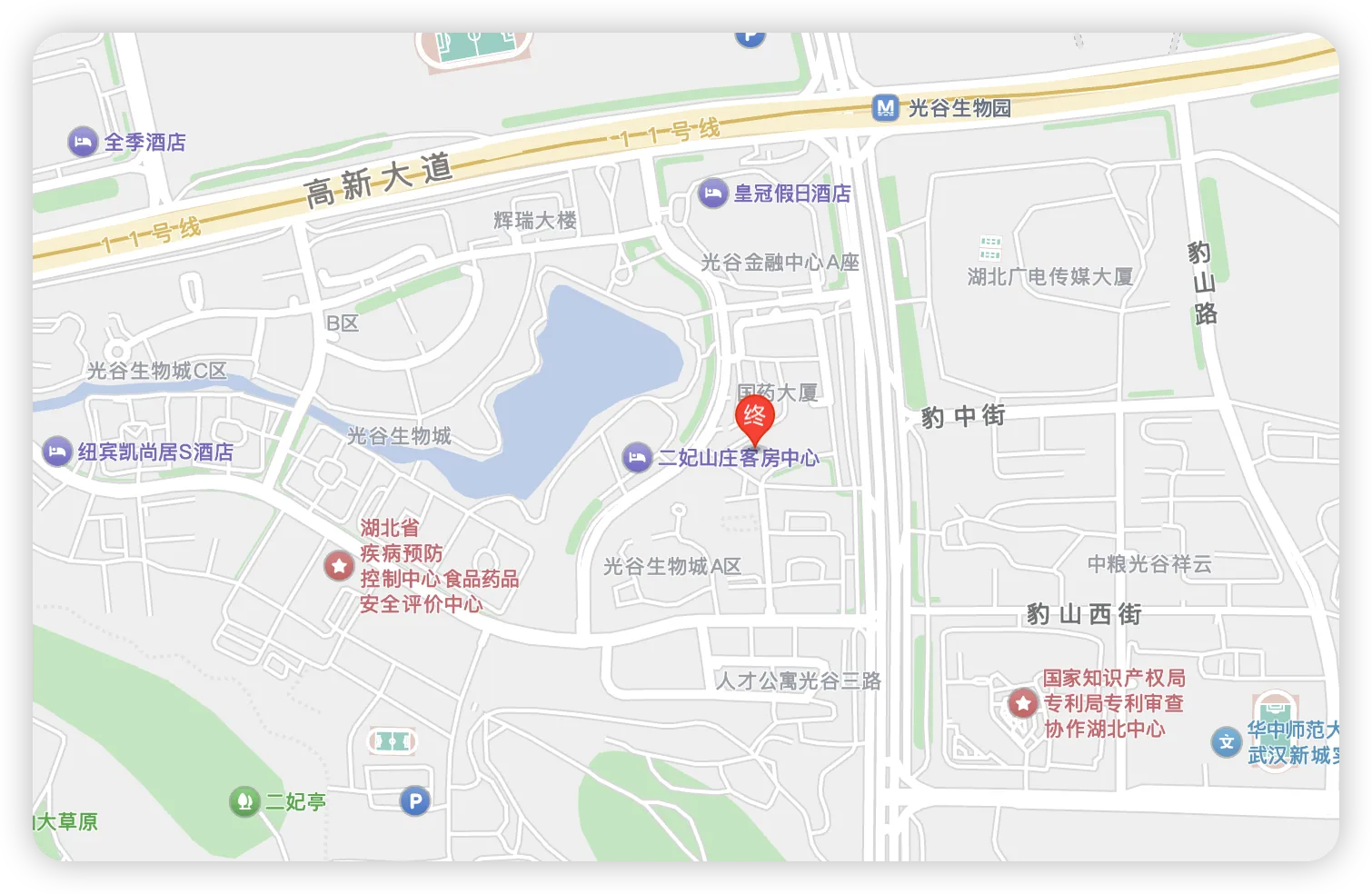
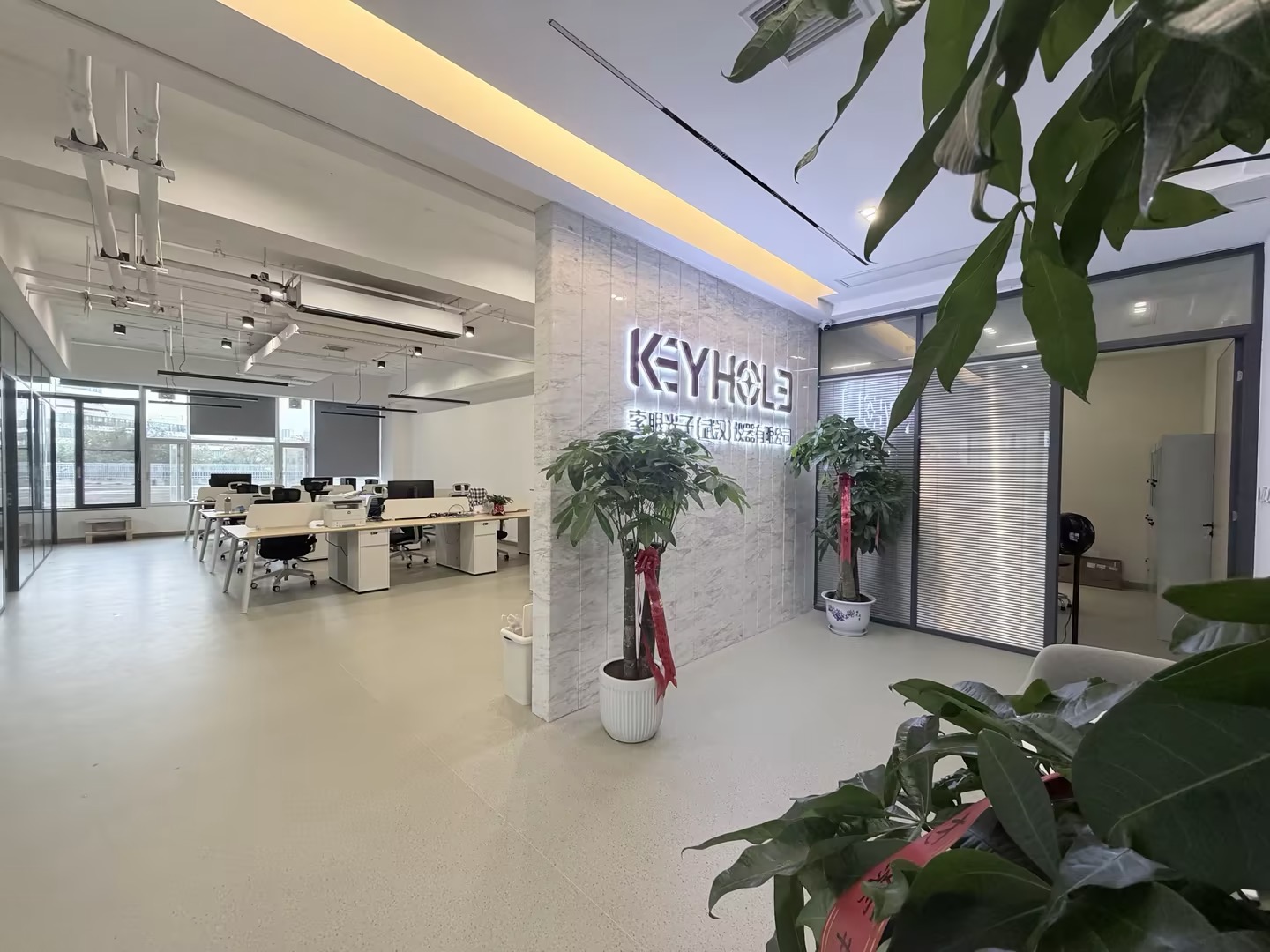
WHY KEYHOLE?
Join a Role You Can Help Define.
An early-stage team is still building its processes and answers. It also brings you closer to technical decisions, product definition and customer challenges, with a clear view of your contribution to the instrument.
Technical leads and specialists provide mentorship, R&D platforms, computing resources and integration environments. Core team members may be eligible for equity incentives.
Applications: hr@keyholephotonics.com