

01 / Optical communications
Fiber Link and Assembly Quality Testing
Connect basic inspection, anomaly localization and retest records around actual connection and link conditions.
FIBER LINK QUALITYExplore the Measurement SolutionAPPLICATION SOLUTIONS
Start with the task—connect spectral characterization, optical path diagnostics and multichannel verification.
For optical communications, silicon photonics and emerging photonic applications, relate measured parameters to engineering problems and provide traceable evidence for R&D, process optimization and quality assessment.
Find Your Test Task ↓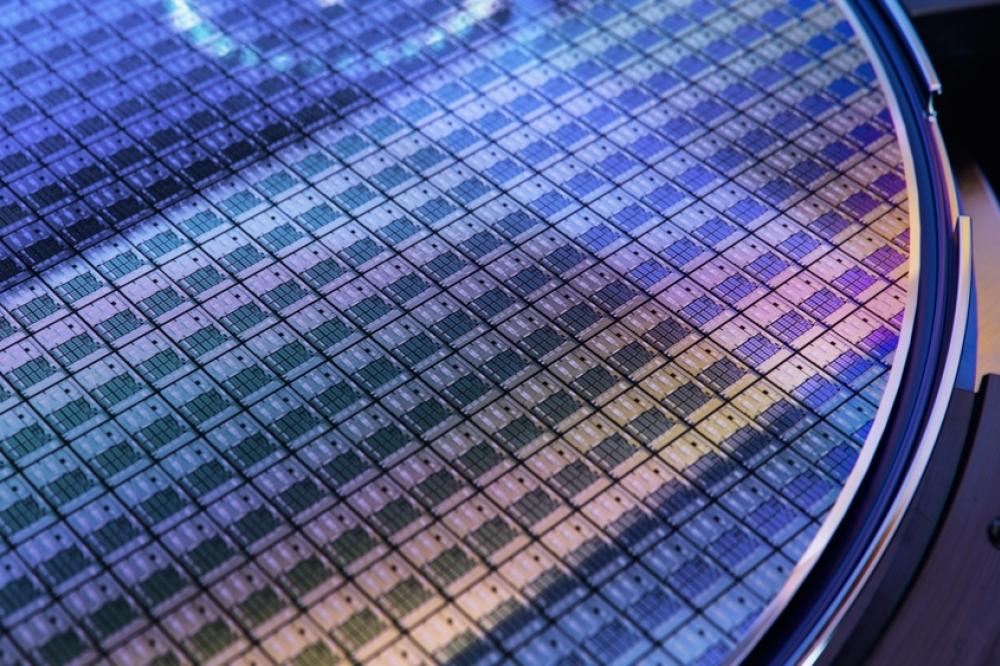
EXPLORE APPLICATIONS
Filter by application area or start with a specific test task. Each solution explains why the parameters matter, then defines the measurement method and configuration boundaries.
6 test tasks
Connect basic inspection, anomaly localization and retest records around actual connection and link conditions.
FIBER LINK QUALITYExplore the Measurement SolutionCharacterize wavelength-dependent insertion loss, return loss and polarization-dependent loss to support component design verification and consistency comparisons.
SPECTRAL CHARACTERIZATIONExplore the Measurement SolutionGo beyond detecting a change in loss to investigate which part of the optical path may be responsible.
COUPLING & DIAGNOSTICSExplore the Measurement SolutionUnderstand device performance before packaging. Relate spectral anomalies to spatial information to support design and process development.
WAFER & CHIP TESTExplore the Measurement SolutionConnect component analysis, optical path verification and result traceability through clear channel organization for denser optical interconnects.
CPO & OPTICAL INTERCONNECTExplore the Measurement SolutionFrom tunable sources to integrated optical path characterization, establish measurement conditions that can be discussed and verified for emerging experiments.
FRONTIER PHOTONICSExplore the Measurement SolutionTEST THROUGH THE LIFECYCLE
DUTs and stations change; measurement conditions, references and records must remain clear.
Compare spectral and transmission responses to understand differences between design and measurement.
Observe changes before and after coupling and assembly to narrow the investigation.
Associate results with actual paths and compare channel performance.
Apply agreed methods and thresholds, retaining evidence for review.
THE KEYHOLE APPROACH
Spectral information reveals wavelength-dependent behavior; coherent optical measurement spatial information provides location clues for reflections and optical anomalies. Link conditions, device structures and results to support engineering decisions.
Explore the OVX Platform ↗Assess device performance through wavelength response, loss and polarization-dependent differences.
Investigate where an issue may occur using event locations and structural information.
Retain reference planes, paths, configurations and versions to give comparisons and retests context.
CONFIGURE AROUND THE TASK
OVX includes a built-in TSL. Standalone TSLs serve user-built systems. External optical controls and basic instruments are selected per task and are not all standard OVX equipment.
An integrated optical measurement and analysis platform with a built-in TSL.
Trace mini / Standard / Pulse* / Pro*Tunable sources, channel switching and polarization control for user-built systems.
OVX-TLS / OVX-SW / OVX-PCAdd independent spectral, state-of-polarization and PDL analysis as required.
OVX-OSA / OVX-PA / OVX-PDL* Pulse and Pro are unreleased series. Listed specifications are preliminary; final configurations, features and availability are subject to formally released technical documentation.
These standalone-instrument series identifiers are provisional names from the product-family plan. Models, interfaces, functions and delivery status are subject to confirmed technical documentation. Sequential optical switching is not simultaneous multichannel acquisition.
ONE WORKFLOW
Efficient, simple, modular, platform-based and standardized. Web GUI, SCPI and a unified Measurement API are design principles for consistent measurement semantics across interaction and automation.
OVX-Studio organizes measurement and analysis; OVX-StoreX manages applications and versions; the service platform links field records and issue resolution. Availability depends on the product version.
Explore the Software Platform ↗