

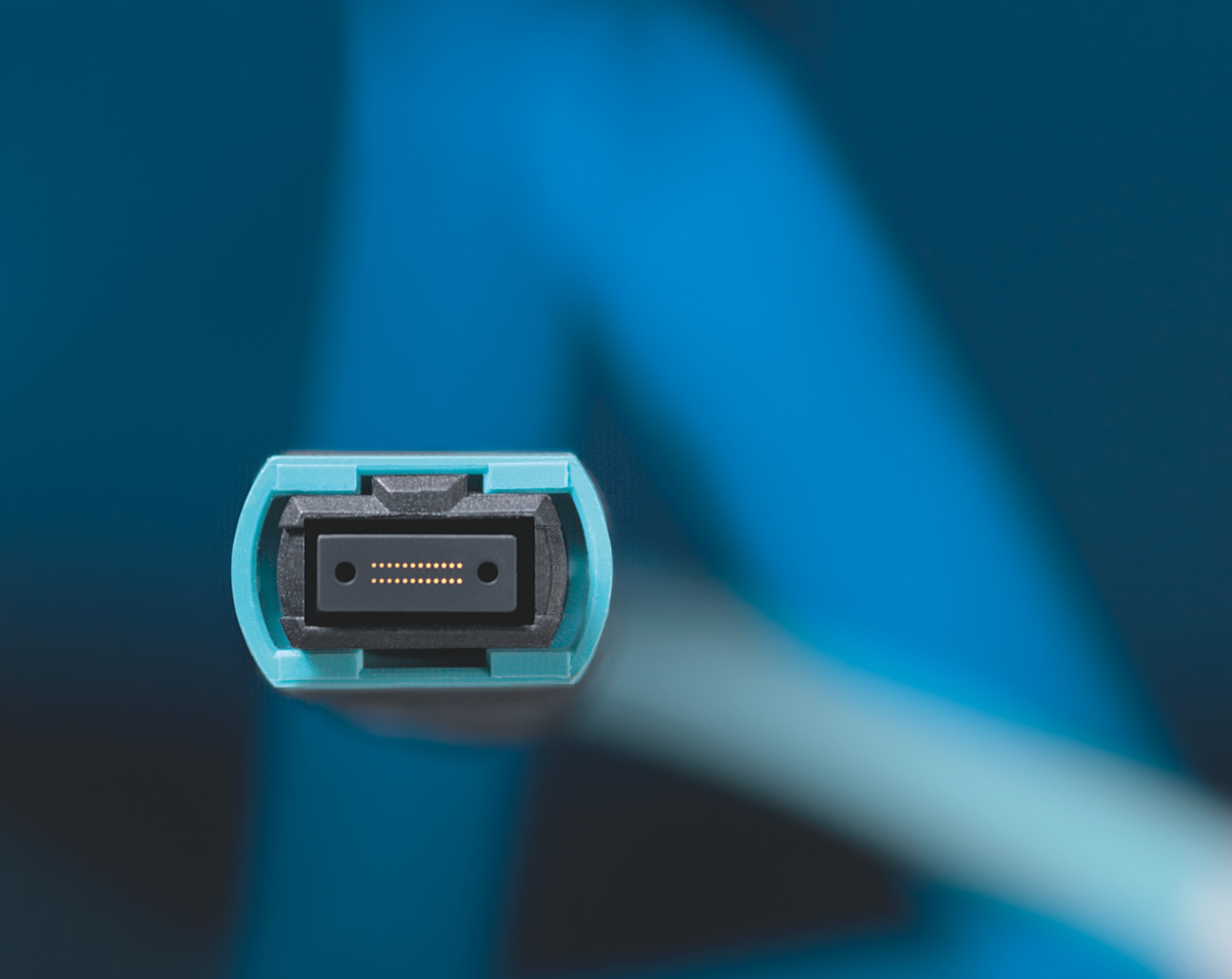
In a single-channel experiment, an engineer can usually see the connection. A multifiber connector or multiport optical engine adds questions: Which physical port, switching path and reference were used? Was any channel omitted or repeated?
Denser interconnects bring these questions to the bench. Shorter scans are useful, but without reliable physical-channel association they may only generate unusable data faster.
From Port Counts to Actual Paths
A channel is more than a software counter. It represents device ports, connector fibers, patch cords, switch ports and actual detector-path connections.
Different numbering conventions can cause mismatches. In this hypothetical, non-product-specific scenario, panel numbering uses one viewing direction while assembly records use the opposite connector face. A complete script can then assign results to the wrong ports unless orientation is verified.
Multichannel testing first needs a verifiable path map. Santec's switch material places multifiber mapping verification alongside loss and return-loss testing, illustrating the connection between routing and measurement.Santec optical switch application reference
One Sweep Is Only Part of the Cycle Time
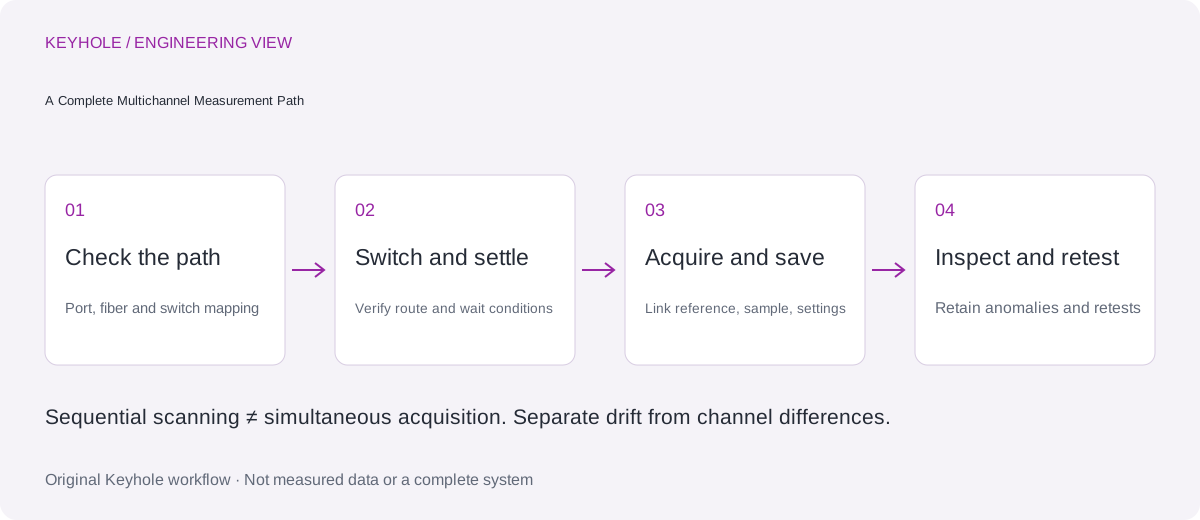
Sequential paths usually require switching, settling, acquisition, processing and saving. Referencing, connection checks and anomalous-channel retests add time.
A simplified time budget is:Total time = initial setup and referencing + switching, settling, acquisition and processing for each path + anomaly retests. This is an accounting framework, not an instrument performance formula. Overlapping steps must be evaluated using the actual schedule.
Sequential switching is not simultaneous acquisition. Temperature or time drift creates differences between early and late channels. Separate actual channel variation from conditions changing during the scan.
Routing Improves Efficiency—and Becomes Part of the Measurement
Optical switches reduce manual reconnection, but switches, cords and connectors retain their own transmission and repeatability characteristics. Paths cannot be assumed identical without verification.
When small channel differences matter, references should correspond to actual paths. Replaced cords, changed routing or cleaned/reconnected interfaces require method-specific reference-validity checks, not just a file timestamp.
Reference management means clear associations: path, settings, creation time and valid connection states—not maximum file count. Otherwise path errors become device differences, and later statistics cannot restore missing comparability.
Retain Abnormal Channels, Not Only the Average
Channel averages summarize results but can conceal local anomalies. An acceptable mean does not support channel-by-channel release when every path must meet its budget.
Reports should trace summaries back to channel-level raw traces, references and retests. If reconnection restores a channel, retain the condition change rather than overwriting the first result. Stable location-specific anomalies and random access-related changes may require different investigations.
Define retest rules in advance. Unbounded testing until a pass changes the dataset and makes it appear more stable than the process. Retests must not retain only the best reading.
Automation Also Removes Unexplained Delays
As testing becomes repetitive, measure time spent on manual checks, waiting, file searches and connection verification. This reveals whether sweep speed or routing, references and records deserve priority.
Start configuration discussions from actual paths: simultaneous acquisition or sequential scanning, required port pairs, per-path referencing and exception recovery. These determine switches, measurement cores and software organization—not just channel count.
Optical-path testing remains only part of optical-engine verification. It does not replace high-speed signal, BER or communication tests. Associate all results with the same object while retaining distinct methods and assessment conditions.