

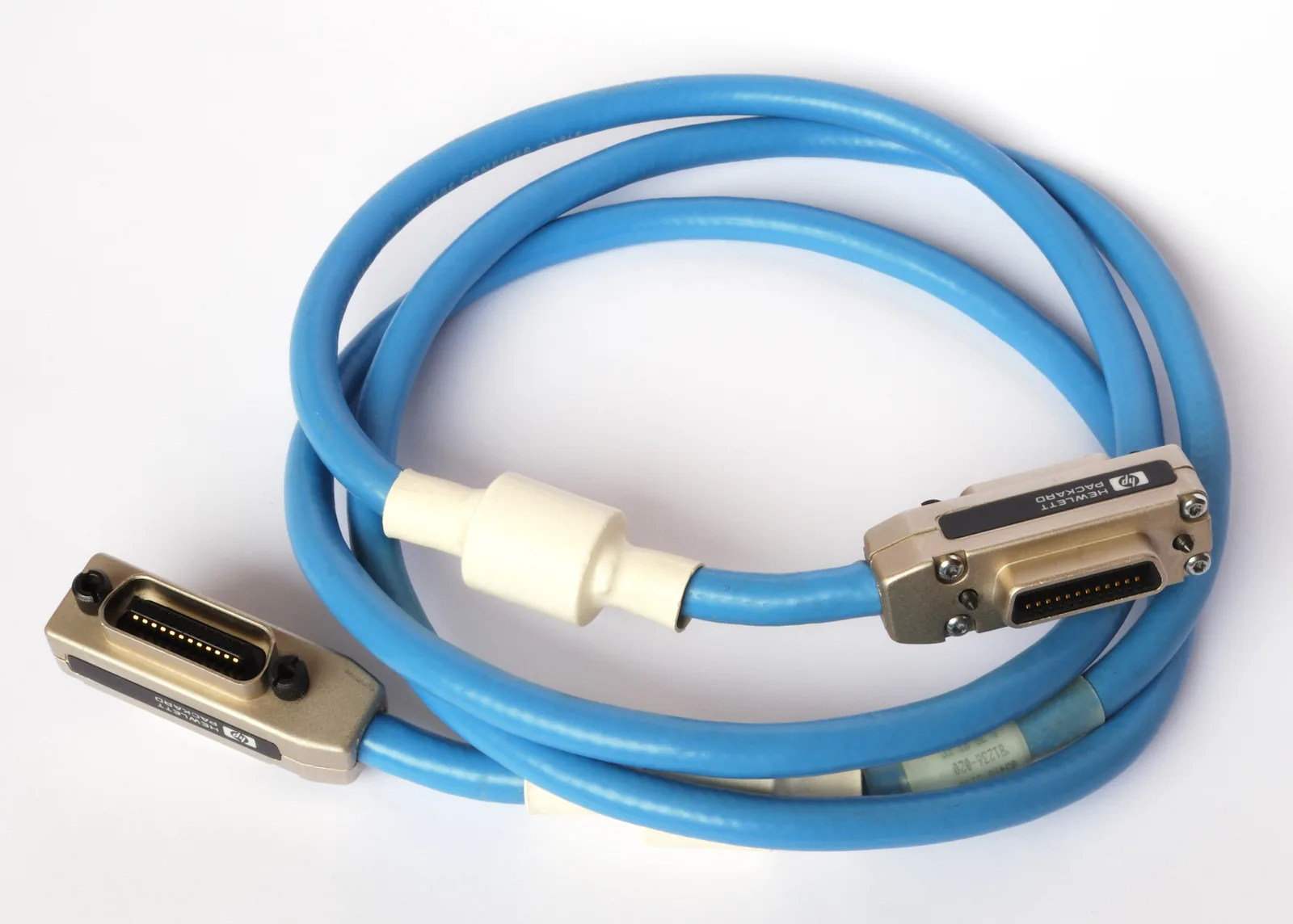
Remote-query response starts automation; it does not complete it. During sample testing, commands may be sent while acquisition remains unfinished, files may lack sample IDs, or scripts may silently reuse previous settings.
These issues rarely appear in a single parameter specification but directly affect repeatability. As standalone instruments become coordinated systems, the challenge shifts from replacing one click to reliably completing a task.
What Standard Interfaces Solve
SCPI supplies a standardized command framework for programmable instruments, maintained by the IVI Foundation. It reduces the burden of learning control languages from scratch for every device.IVI Foundation specification downloads
A shared command framework does not make all device commands, models or options identical. Migration still requires checks of capabilities, units, formats, triggering and firmware. Similar syntax does not establish comparable results.
Useful standardization confines device differences within documented adaptation boundaries. Changing an interface should not force a complete workflow rewrite, but actual instruments and functions still require validation.
Command Receipt Does Not Mean the Physical Process Has Finished
Scanning, movement, switching and processing take time. Reading immediately after a start command may not return the intended acquisition.
Keysight distinguishes sequential and overlapped commands and describes operation-complete and waiting mechanisms. Programs need defined synchronization points; successful transmission is not task completion. Consult the target instrument's manual for specific behavior.Sequential and overlapped commands reference
An operation-complete report does not prove the external optical path, temperature or DUT is stable. Instrument status and experimental stability are separate judgments. Fixed waits may be valid under tested conditions but need review when tasks or samples change.
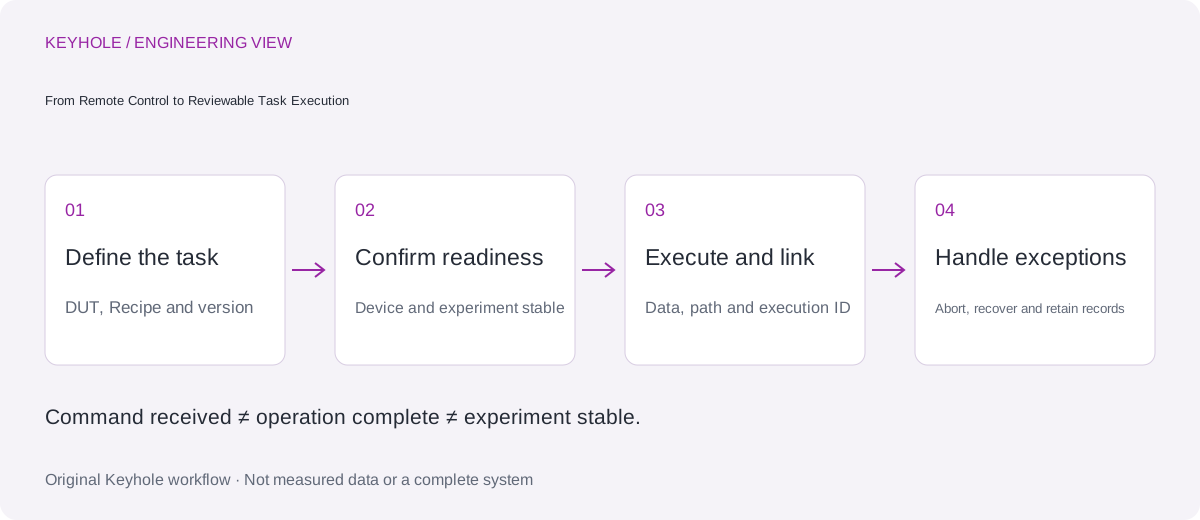
One Task Should Retain Its Meaning Across Interfaces
Touch interfaces serve operation beside the instrument, Web GUIs support browser-based task views, and remote interfaces serve scripts and integration. Interaction can differ; setting meanings, units and result identities for the same task should not.
A GUI may select a single measurement while a script defaults to continuous acquisition, or two interfaces may label loss identically while using different references/sign conventions. Matching button colors cannot fix these differences; measurement definitions and data contracts must.
Keyhole's software design aims for common measurement semantics and record logic across entry points, reducing relearning. This is a platform and standardization principle; interfaces, function coverage and delivery scope require version-specific confirmation.
Keep Enough Context with the Result
Repeatable records identify sample, channel, settings, references, calibration associations and software versions. Traceable relationships between raw and processed data prevent algorithm-update effects from being mistaken for device changes.
Recipes organize reusable parameters but are not permanently valid guarantees. New equipment, path changes or algorithm updates require renewed suitability checks. Versions provide evidence needed to explain differences.
For multiple stations, bind object and execution IDs during export. Renaming files later is error-prone and obscures original versus edited records.
Exception Recovery Is Part of Testing
Network loss, timeouts or sample removal can leave tasks incomplete. Restarting blindly risks duplicate measurements; treating every timeout as a fail can label system faults as device faults.
Distinguish valid results, failed measurements and incomplete tasks, with explicit retry conditions. Optical outputs, motion and interlocks need appropriate hardware/control safeguards—not only webpage or script status.
Automation acceptance should verify timeout, abort and recovery records as well as normal completion. Reliable automation reduces operations while keeping the process understandable and reviewable.